




· By Moni Dajee
ASAP: As Slow As Possible
Finding Meaning in Slow Intentional Making, Bees & Heritage Crafts
We’re used to seeing ASAP as a command to hurry.
As Soon As Possible.
It appears in emails, messages and to-do lists. Capitalised to enhance the sense of urgency.
Something always needs doing. Something needs finishing. Something needs to happen now.
Seeing those 4 letters used to make my body tense up and I would enter ‘people-pleasing’ mode.
But all abbreviations are open to interpretation, so what if we gave those four letters another meaning?
As slow as possible.
As soft as possible.
As soulful as possible.
As sustainable as possible.
As sincere as possible.
As steady as possible.
Most importantly → Allow space and pause.
It feels rebellious to choose slowness in a world that rewards hustle culture. The antidote to grinding is simply grounding.
These days, I choose not to rush if I can avoid it. Don’t get me wrong, I am still a last minute kinda girl. I fluctuate between being extremely late or dead on time. But I falter and fluster when I move fast.
The more time I spend with bees, making incense, pouring and dipping beeswax candles and exploring traditional remedies, the more convinced I am that some things simply cannot...and should not...be rushed.

Can you hurry a honeybee?
I have been thinking about slowness a lot lately, particularly through my work with bees.
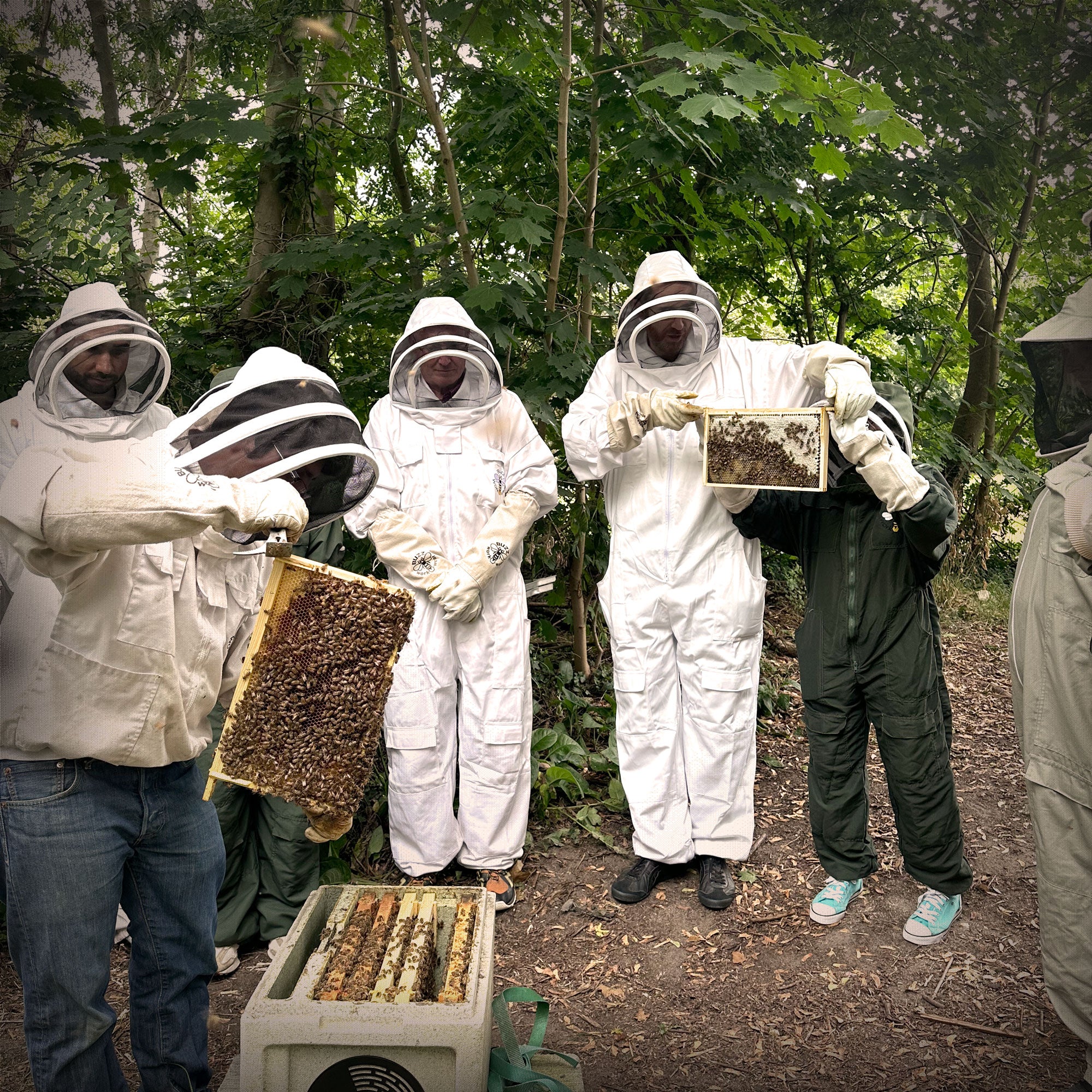
You simply cannot hurry a bee. I have seen many beekeepers take a rushed, impatient, laborious approach with their bees - they usually have a puffy face!
We work around them, their flow, their rhythm in tune to nature. I have to bring attention to my own body. My movements need to be calm and deliberate. Move too frantically and they sense it. I become flustered, the hive becomes unsettled, the bees will sense my stress. That intuitive practice comes with time and patience.
On the flip side, take too long and they will feel like you are an annoyance invading their space. Beekeeping asks me to slow my breathing, soften my movements, feel their frequency and vibration and pay attention. To be calm, but present. Gentle, but purposeful. Slow but not too slow! I move carefully, but I don’t linger unnecessarily or disturb their flow. Tending to the bees is an artform, one that I will never fully master but I grow more confident, year by year.
The bees have no interest in my schedule.
They are not thinking about the next appointment, the unanswered email or the thing I was supposed to finish yesterday. And spending time around them has reminded me that being fully present is a skill that needs attention, in a world of endless, algorithmic distractions.

The slowness is part of the art.
When I make beeswax candles and incense. When I grow and ferment vegetables. When I forage and harvest. There is no shortcut to the process. No frantic ASAP.
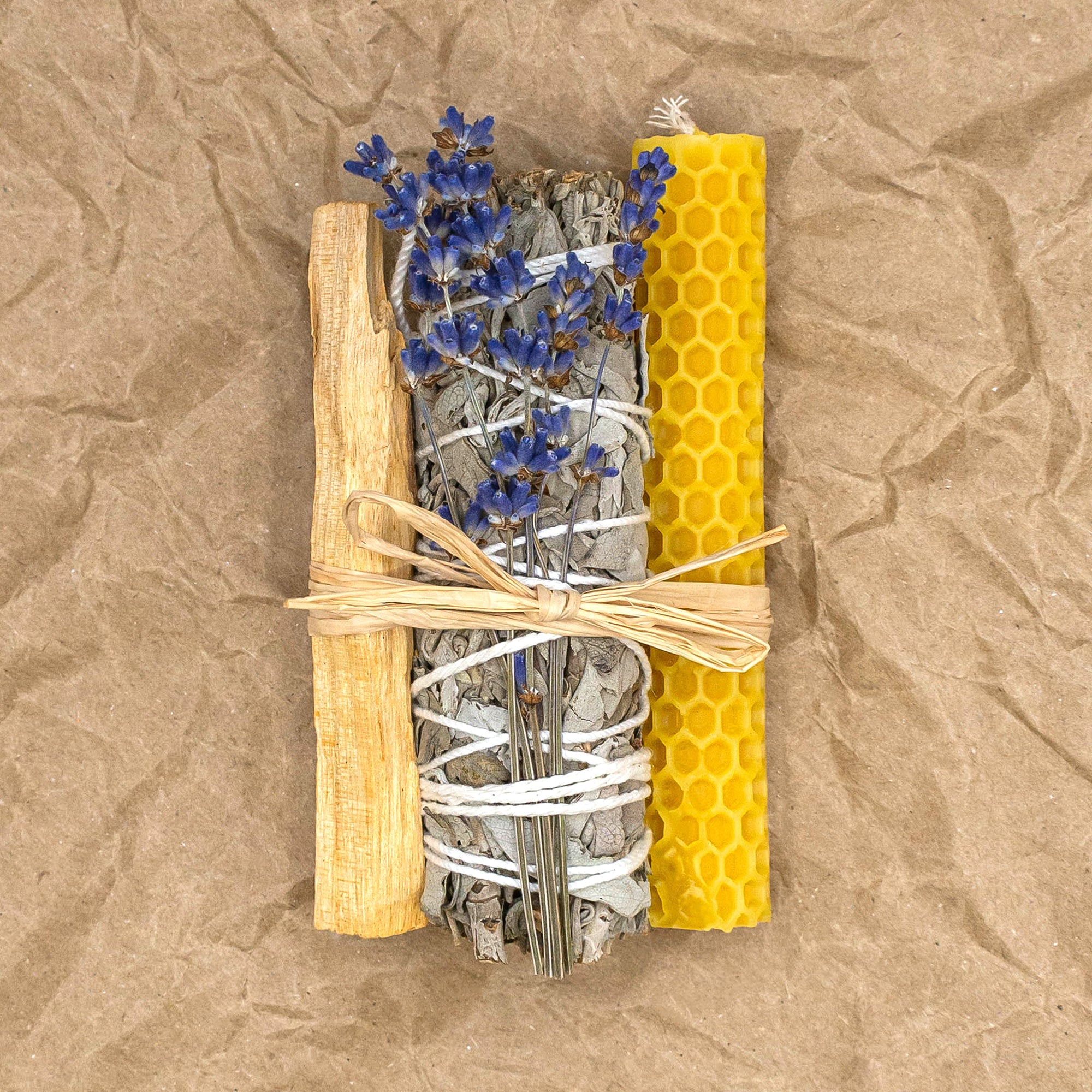
A candle is built layer by layer. The wick is rhythmically and mindfully dipped in beeswax.The form gradually emerges through focused repetition.
Incense made with ingredients infused with intention. Blended and worked with the hands. The process is as important as the finished object.
When I craft remedies using ingredients from the hive, such as propolis oil or honey ferment, the process does not yield instant results, it takes time for the flavours to infuse and develop.
This kind of slow crafting can feel meditative, restorative, addictive.
There is something quietly satisfying about repetitive work. The hands become occupied, the mind softens, and suddenly there is space for thoughts to wander.
That self-forgetfulness lies at the heart of artistic creation. It is also what childhood play can offer us: a state of being so completely immersed in the present that we stop watching ourselves from the outside and simply inhabit the moment.
We become absorbed in the doing.
Slow does not mean unproductive
There is a difference between making something quickly and making something well.
Slow doesn’t mean unproductive. But it should be seen as considered. Artistic creation and childhood play have something important in common - they ask us to forget ourselves for a while. To become completely absorbed in what is happening now.
This is one of the things I disliked about art school. It often felt as though quantity was valued over quality — the person who produced the most work was the one who appeared to be doing best. There was an unspoken pressure to fill pages and bulk out a portfolio, even when that meant rushing the process.
Meanwhile, thoughtful work that took hundreds of hours - work that had been slowly developed, questioned and refined - could be overlooked simply because there was less of it.
The ‘aha’ moment
In my bee inspired workshops, I am not interested in rushing people through a process. I always tell my students to aim for personality not perfection. I want there to be room for questions, mistakes, experimentation and those wonderfully messy moments when something doesn’t quite work. I want them to know everything is figuraoutable!
Because that is often where the learning happens.
Suddenly, there is the ‘aha’ moment.
A technique clicks.
Your hands understand something they didn’t understand an hour ago.
You enter the ‘flow’ state.
That moment is magic.
But it rarely happens when we are rushing.
It happens when we are present enough to notice.
And this is what I try to bring into my workshops — whether we’re spending time with bees, exploring ritual and remedies, dipping beeswax candles, or making incense from heritage ingredients and techniques.
A space to go slowly. To get messy. To experiment. To ask questions. To play.
Slow workshops for curious hands and minds
I am there as a creative guide - honouring your space, your pace and your curiosity. I want you to have the time to notice the how, the why, the ‘what if?’
Whether we are spending time with bees through our beekeeping workshops, exploring rituals and natural remedies, or learning the art of incense making, I want the studio to be a place where you can slow down and go deeper.
These are heritage crafts, and I want to honour them properly, with respect to those did it before us.
There is time to ask questions.
Time to observe.
Time to try.
Time to get messy.
Time to make mistakes.
Time to change your mind.
Time to play.
And time simply to take everything in.
Perhaps you leave inspired to begin a new creative journey. Perhaps you start looking differently at the plants, bees, materials and traditions around you. Perhaps you find yourself asking better questions.

The Art of Noticing
We all have a million things to do, but we should be present for the things we enjoy doing. To notice the process. To make room for thought, intention and care. It's in those slow, repetitive moments, that I am able to hyperfocus and ideas flurry around. Self-forgetfulness lies at the heart of the artistic process.
The world will always give us reasons to hurry.
Maybe every now and then, we can choose a different kind of ASAP. The slow and steady kind. The one that always wins the race ;)
Explore the workshops
Our workshops are IMMERSIVE, INTERACTIVE, INSPIRING experiences designed to connect you to the magic of bees, plants and our planet. Perfect for team-building or personal enrichment, these practical, engaging, bee inspired workshops encourage meaningful discussions about our environment, community, traditions and folklore. My workshops offer a space to explore beekeeping, incense making, rituals, natural remedies and heritage crafts slowly, intentionally and in depth.
Come curious.
Come ready to make a mess.
Come ready to play.
Come ASAP.

Share:
0 comments
WILDCRAFTED - RECIPES, REMEDIES + RITUALS
-

ASAP: As Slow As Possible
We’re used to seeing ASAP as a command to hurry. It feels rebellious to choose slowness in a world that rewards hustle culture.
-

Blackcurrant Hoisin Sauce
Rich, glossy and bursting with sweet, tangy berry flavour, this blackcurrant hoisin sauce has all the deep notes you expect, but with an extra fruity richness that makes you want to add a good dollop to every pancake.
-

The Benefits of Planting Wildflowers
Wildflowers turn abandoned fields into wondrous dreamlands. They are independent, resilient plants that bring beauty to the mundane. Like wildflowers we must allow ourselves to flourish and grow in all the unlikely places people never thought we could.